



–
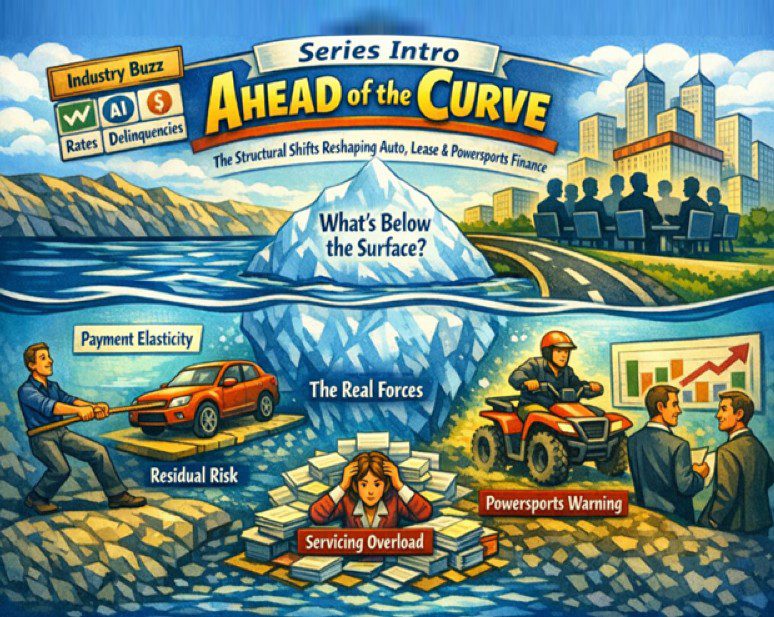
Most of the industry conversation right now is stuck at the surface: Rates, Delinquencies, AI Underwriting, Digital Transformation, Customer Experience. All true… but none of them explain what’s actually reshaping Auto, Lease, and Powersports finance.
After my last Series, (and the Recap Article), I told myself I wasn’t starting another one anytime soon. But the conversations I’ve been having lately made it hard not to.
So, let’s be honest… IF Rates and Delinquencies were the whole story, every lender’s strategy deck would fit on one slide… and half the industry wouldn’t be pretending their “AI underwriting” is just a rules engine with better marketing.
Beneath the headlines, a different set of forces is driving the next era of the industry… forces that rarely get discussed publicly, but are front and center in Boardrooms, Credit Committees, and PE investment conversations.
Over the next five posts, I’m breaking down the structural shifts that will define 2024–2026 and beyond:
1.) Payment Elasticity — not Rates — is the real constraint
2.) Residual Risk is becoming the new Credit Risk
3.) Servicing is quietly eating Origination
4.) Powersports is the early warning system for Auto Finance
5.) Dealer Financing Tiers will reshape Market Share
These aren’t “trends”.
They’re INFLECTION POINTS… and they’re already changing how capital flows, how risk is priced, and how lenders compete.
This Series is about the conversations happening behind closed doors.
The ones that will determine who Survives, who Scales, and who gets LEFT BEHIND.
–


VP, Loss Mitigation | Auto, Lease & Powersport Finance |
Risk & Recovery Strategy | LGD, Remarketing & Portfolio Performance
–
–
Related:
Auto Finance Risk Series: A Structural Shift in Credit, Collateral, and Recovery
Series Intro —> “AHEAD OF THE CURVE: The Structural Shifts Reshaping Auto, Lease & Powersports Finance” – Series Intro —> “AHEAD OF THE CURVE: The Structural Shifts Reshaping Auto, Lease & Powersports Finance” – Series Intro —> “AHEAD OF THE CURVE: The Structural Shifts Reshaping Auto, Lease & Powersports Finance”
Series Intro —> “AHEAD OF THE CURVE: The Structural Shifts Reshaping Auto, Lease & Powersports Finance” – Delinquency – Bankruptcy – Lending – Auto Loan – Credit Union Collections – Credit Union Collectors – Repossession – Repossess – Repossession – Remarketing






More Stories
Capital One Is Lending More to Subprime Borrowers. The Real Test Comes in 2027
Ally Keeps Growing as Auto Loan Delinquencies and Losses Edge Higher
When the Auto Loan Outlives the Car
Nearly One in Five American Families Fell Behind on Debt Payments
The Weak Links: One Loan, Many Points of Attack
Join Us at UCC 2027 – Credit Union Attendees Receive $200 Off