




Nine luxury cars, $2.5 million in fraudulent financing applications and an international fraud enterprise exposed.
–
Hidden Hills, CA – She was just 14 years old when her Social Security number was stolen. For years, unbeknownst to her, a Southern California man used her identity to help finance a lifestyle of Lamborghinis, Porsches, a Rolls-Royce and other luxury automobiles worth nearly $2 million. But the stolen Social Security number would eventually become a critical piece of evidence in a federal investigation that exposed a far more extensive criminal enterprise.
On November 9, Patrick Jesse Harriott was reportedly sentenced to 97 months in federal prison following his guilty plea to conspiracy to commit bank fraud. Behind his extravagant lifestyle, federal investigators uncovered an international fraud operation involving stolen credit cards, designer handbags, luxury watches, fabricated financial statements and hundreds of thousands of dollars in unexplained cash deposits.
While the case exposes significant vulnerabilities in synthetic identity detection and automobile lending, it also raises another troubling question: Were auto lenders and luxury automobile dealerships unwittingly facilitating the laundering of criminal proceeds?

–
A Seven-Year Fraud Enterprise
According to a 78-page federal criminal complaint filed on January 29, 2026, Homeland Security Investigations (HSI) had been investigating an international organized crime group operating in the United States, Austria and elsewhere since January 2024.
The investigation encompassed credit card fraud, identity theft, loan fraud and suspected narcotics trafficking.
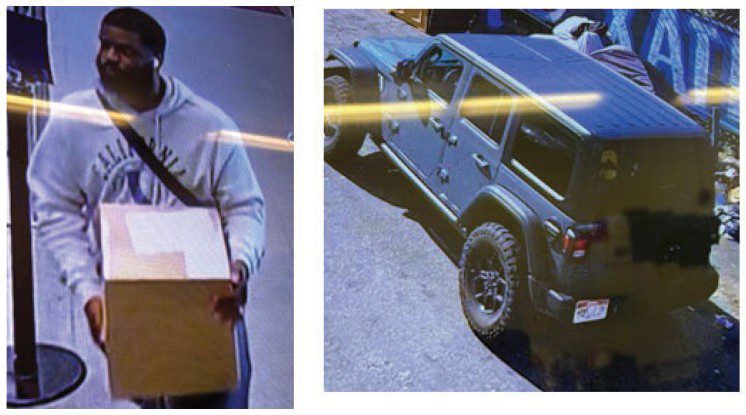
Investigators identified more than $500,000 in credit card fraud attributable to Harriott and his alleged co-conspirators, although investigators believed the actual amount likely exceeded $1 million.
More than 20 lavish international trips were identified as having been funded through fraudulent credit card transactions, with destinations including Dubai, the Maldives, French Polynesia, Italy, France and South Africa.
In his March 19 plea agreement, Harriott admitted that he and his co-conspirators used credit cards issued to other individuals by federally insured financial institutions to purchase luxury merchandise, including watches and handbags, without the knowledge or consent of the actual cardholders.
But the credit card fraud was only part of the enterprise.
–
A 14-Year-Old Girl’s Social Security Number
As early as 2018, Harriott used a stolen Social Security number to open an account at Wells Fargo. The number belonged to a girl who was approximately 14 years old at the time.
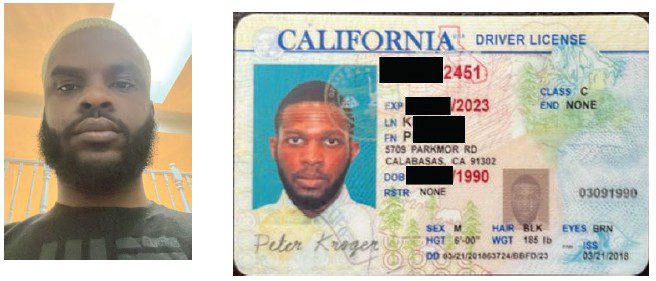
Unlike conventional identity theft, Harriott used much of his own legitimate identifying information when applying for automobile financing. His name, date of birth, driver’s license, address, telephone number and email address were his own. The Social Security number was not.
This form of fraud, commonly referred to as hybrid synthetic identity fraud, allowed Harriott to establish financial relationships using a combination of legitimate and stolen identifying information.
Investigators theorized that the victim’s young age and lack of an established credit history may have contributed to the success of the scheme.
In 2023, Wells Fargo closed the account on suspicion of money laundering. However, the fraudulent automobile financing activity continued into January 2025.
When federal investigators contacted the young woman in January 2025, she was unaware that her Social Security number had been compromised.
–
Nine Luxury Cars in Five Years
Between September 2020 and January 2025, investigators identified at least 12 fraudulent vehicle financing applications totaling more than $2.5 million. At least nine were successful.
| Vehicle | Reported value |
| 2020 Lamborghini Urus | $247,259 |
| 2017 Rolls-Royce Wraith | $238,990 |
| 2020 Lamborghini Urus | $184,815 |
| 2021 Porsche 911 Turbo | $275,000 |
| 2021 Mercedes-Benz S580 | $139,000 |
| 2022 Porsche Taycan | $174,770 |
| 2023 Porsche Cayenne | $91,949 |
| 2022 Porsche 911 | $278,000 |
| 2024 Lamborghini Urus | $319,522 |
| Total | $1,949,305 |
To support his financing applications, Harriott claimed to be self-employed through a business named AP Luxury Collections LLC, earning a monthly salary of $20,000 and receiving an additional $50,000 per month from a purported family trust.
Bank statements were altered to substantiate his claims of substantial income and wealth. One purported savings account showed an average balance exceeding $750,000.
Its actual balance was six cents.
Some financial institutions identified discrepancies during their underwriting investigations and declined his applications. Others did not.
–
$465,000 in Unexplained Cash
Perhaps the most intriguing aspect of the investigation was not the fraudulent financing itself, but the money Harriott brought to the transactions.
According to the federal complaint, Harriott paid more than $262,000 in cash, cashier’s checks and domestic wire transfers to secure the luxury vehicles and obtain more favorable lease terms.
Where did the money come from?
The investigating HSI agent addressed that very question in the criminal complaint:
The source of the payments is currently unknown; however, based on my training, experience, and investigation to date, I believe that the funds were likely obtained as part of an unknown unrelated criminal scheme and/or the Target Offenses.
Federal investigators reviewed more than 2,000 pages of bank statements from Harriott’s personal checking account and the business checking account of AP Luxury Collections LLC at JPMorgan Chase.
Between April 2023 and January 2025, the two accounts received approximately 200 separate cash deposits totaling $465,000. Investigators identified activity consistent with suspected structuring and believed the funds were likely derived from criminal activity.
Harriott also reportedly acknowledged that he had not filed tax returns since at least 2019.
Given his admitted involvement in the fraudulent acquisition of expensive watches and designer handbags, the nature of his purported business and the source of those cash deposits raise some obvious questions.
–
Were Auto Lenders Unwittingly Laundering Money?
Unlike many perpetrators of automobile financing fraud, Harriott did not simply acquire vehicles and disappear with them.
According to investigators, he typically retained the vehicles for several months before returning them to dealerships and acquiring new ones. In some instances, he realized substantial trade-in equity.
In June 2023, Harriott obtained leases through Porsche Financial Services for a Porsche Cayenne and a Porsche 911, with combined monthly lease payments of nearly $6,900.
As part of the transaction, Harriott received approximately $23,000 in trade-in equity from two previously fraudulently obtained vehicles, a Mercedes-Benz S580 and a Porsche Taycan. Investigators attributed the equity to approximately $50,000 in original down payments, the source of which remained unknown.

In January 2025, Harriott traded in two previously leased Porsches and provided an additional $50,000 toward the acquisition of a $319,522 Lamborghini Urus.
Were these simply the extravagant spending habits of a successful fraudster, or were the automobile transactions also serving to obscure the origins of criminal proceeds?
While the available court records do not conclusively establish that proceeds from the credit card fraud funded the automobile transactions, the possibility is difficult to ignore.
For auto lenders, the distinction between credit risk and money laundering risk is an important one. Substantial down payments may make a transaction appear less risky from an underwriting perspective, but the source of those funds is an entirely different consideration.
–
The Last Lamborghini
Harriott’s luxury automobile acquisitions came to an end in February 2025.
After Harriott brought his recently acquired Lamborghini Urus into the dealership for service, Homeland Security Investigations coordinated with the legal department of O’Gara Coach Company to recover the vehicle.
Despite the successful recovery, the dealership reportedly sustained a significant financial loss due to depreciation and damage to the Lamborghini.
Harriott was subsequently informed that his previous financing applications had been identified as fraudulent and that he was no longer permitted on the dealership’s property.
By the time the criminal complaint was filed, Harriott was no longer in possession of any of the nine identified luxury vehicles.
–
The Spoils of Fraud
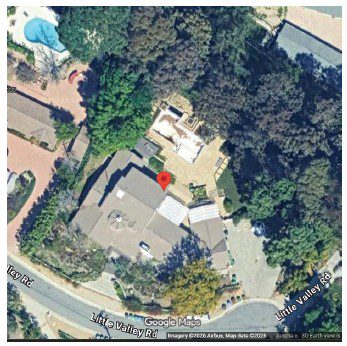
On January 28, 2026, federal authorities executed a search warrant at Harriott’s residence in the affluent Southern California community of Hidden Hills.
Among the property subsequently ordered forfeited were:
- $15,136 in cash.
- Six Hermès handbags, including four Birkin bags.
- Rolex, Patek Philippe and Cartier watches.
- Louis Vuitton, Goyard, Chanel and Christian Dior handbags and luggage.
- Cartier jewelry and a 14-karat diamond bracelet.
In his plea agreement, Harriott expressly acknowledged that the forfeitable property seized during the execution of the search warrant constituted proceeds of the bank fraud conspiracy.
Harriott was reportedly sentenced to 97 months in federal prison on November 9.
–
When Good Credit Conceals Bad Money
For credit unions and other automobile lenders, the Harriott case presents a convergence of several risks that are often addressed independently within financial institutions.
Synthetic identity fraud, income verification, credit card fraud, suspicious cash activity and money laundering are frequently the responsibilities of different departments. Yet, in this case, they appear to have existed alongside one another for years.
Of particular concern is that Harriott repeatedly returned to the automobile financing market, successfully obtained new financing and even generated trade-in equity from vehicles acquired through fraudulent applications.
The available court records do not establish the complete payment histories of his accounts. Nevertheless, the case raises the possibility that synthetic identity fraud and suspicious financial activity may remain concealed within otherwise performing loan portfolios.
Delinquency is not necessarily the first indication of fraud, and a borrower with substantial equity is not necessarily a legitimate borrower.
A large down payment may reduce a lender’s credit risk while simultaneously increasing its exposure to money laundering risk.
Sources:
- United States v. Patrick Jesse Harriott, Criminal Complaint, Case No. 2:26-mj-00513-DUTY, January 29, 2026.
- United States v. Patrick Jesse Harriott, Plea Agreement, Case No. 2:26-cr-00095-MCS, March 19, 2026.
- United States Department of Justice – Official Forfeiture Notification
- Frank on Fraud – First Party Fraud Synthetic: 9 Luxury Cars On A Teenager’s SSN
A Teenager’s Stolen Social Security Number – The Downfall of a Luxury Car Fraudster – A Teenager’s Stolen Social Security Number – The Downfall of a Luxury Car Fraudster – A Teenager’s Stolen Social Security Number – The Downfall of a Luxury Car Fraudster
A Teenager’s Stolen Social Security Number – The Downfall of a Luxury Car Fraudster – Police – Police – Arrest – Arrest – Credit Union Collections – Credit Union Collectors – Lending – Fraud – Fraud – Auto Loan – Dealer– Dealer






More Stories
Straw Buyers Wanted – The Surprisingly Public Business of Buying Cars for Export
Alleged $2 Million Fraud and 12 Years on the Run – Credit Union Mortgage Manager Caught
A Former NFL Star, Stolen Millions, a Rolls-Royce, and a Credit Union
Credit Washing Goes Industrial as Identical CFPB Complaints Flood the System
Phantom Auto Loans: Georgia Man Sentenced for $450,000 Fraud Scheme
Gunman Kills One in Rampage over $2,556 Citibank Credit Card Debt