




Manheim’s August Data Reveals a Growing Divide Between Late-Model Vehicles and the Affordable Used Cars Buyers Still Want
–
The headline from the latest Manheim Used Vehicle Value Index is relatively straightforward: wholesale used-vehicle values declined again in August. For auto lenders and collections departments, however, the more important number may be buried beneath the headline.
Three-year-old vehicles depreciated considerably faster than normal, while some much older vehicles held their values unusually well. In a market already carrying larger loan balances and increasingly longer repayment terms, that divergence deserves attention.
According to Cox Automotive, the Manheim Used Vehicle Value Index finished August at 208.2, down 0.9% from July, although still 0.4% higher than a year earlier. Unadjusted wholesale prices declined 0.5% during the month.

But those averages don’t tell the whole story.
–
Three-Year-Old Vehicles Take the Bigger Hit
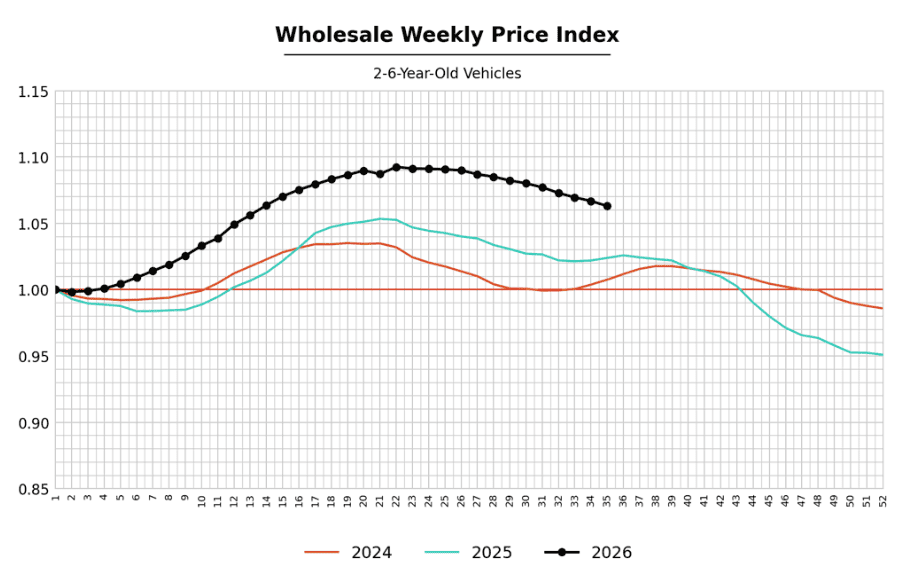
Manheim Market Report prices for its Three-Year-Old Index declined 1.8% during August.
Historically, depreciation for these vehicles during the period averages only about 0.6%. In other words, three-year-old vehicles depreciated at roughly three times their normal August rate.
For lenders, that’s considerably more important than a movement in a broad wholesale index.
Many of these late-model vehicles still secure loans carrying substantial outstanding balances. Add 72- and 84-month financing to the equation, and principal balances can decline much more slowly than collateral values during periods of accelerated depreciation.
That increases the possibility of deeper negative equity and larger deficiency balances if those loans eventually reach repossession.
–
Meanwhile, Old Cars Are Holding Their Ground
The surprise is what is happening at the opposite end of the market.
Cox Automotive Chief Economist Jeremy Robb reported that nine- and ten-year-old vehicles held values roughly six percentage points better than their long-term averages.
The explanation appears to be affordability.
Older vehicles cost less, and Cox sees their stronger performance as another indication that consumers are increasingly searching for affordable used transportation.
That creates an unusual collateral environment: some of the vehicles carrying the largest loan balances are depreciating faster, while considerably older and less-expensive vehicles are experiencing stronger-than-normal value retention.
–
Trucks and SUVs Add Another Concern
The divide isn’t limited to vehicle age.
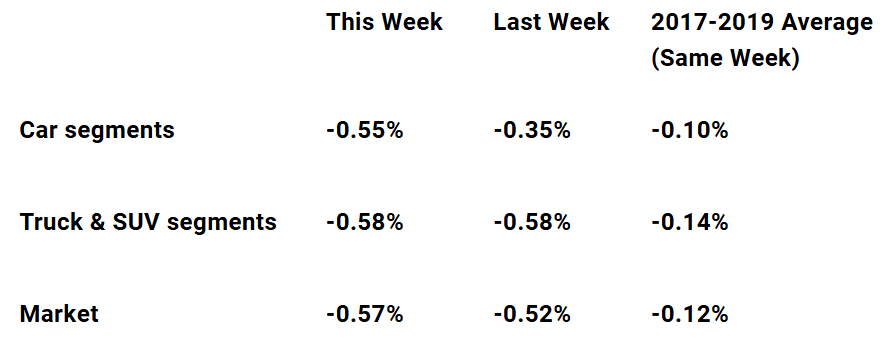
Manheim reports that pickups and SUVs continue to trend lower year over year, while compact cars have shown comparatively stronger performance.
Again, affordability may be playing a role.
That matters to collections because pickups and SUVs frequently entered lender portfolios at substantially higher transaction prices than compact vehicles. When higher original balances, long terms and weakening collateral values intersect, potential loss severity can increase quickly.
–
This Isn’t an Auction Market Collapse
There is an important counterpoint in Manheim’s report.
Auction demand actually improved during August.
Manheim’s sales conversion rate increased to 57.2%, up 3.5 percentage points from July, while wholesale days’ supply declined to 27 days. Retail used-vehicle supply also tightened to 44 days as sales improved.
Robb said depreciation slowed during the latter part of August as stronger retail sales sent dealers back into the wholesale market looking for inventory.
So this isn’t simply a story about used vehicles suddenly becoming unwanted. It’s increasingly a story about which used vehicles buyers can afford.
–
Watch the Collateral, Not Just the Index
Collections managers have always watched delinquency, roll rates and charge-offs. In today’s auto market, collateral depreciation deserves a place alongside them.
A portfolio can look perfectly acceptable from a delinquency perspective while its recovery economics deteriorate underneath it.
Manheim’s August numbers offer a reminder that a single wholesale index cannot reveal that risk. Vehicle age, segment, original balance and remaining term increasingly matter.
For credit unions carrying large portfolios of late-model vehicles financed over six or seven years, the question isn’t simply whether used-car values are falling.
It’s whether the vehicle is losing value faster than the borrower is paying down the loan.
–
Read The Full Report Here!
Your Newer Collateral May Be Losing Value Faster – Your Newer Collateral May Be Losing Value Faster – Your Newer Collateral May Be Losing Value Faster
Your Newer Collateral May Be Losing Value Faster – Credit Union Collections – Credit Union Collectors – Delinquency – Lending – Auto Loan – Remarketing – Wholesale – Black Book – Auction – Auction – Repossession – Repossession






More Stories
Credit Union Employee Accused of Stealing from the Dead
Credit Union Promoted Employee Despite Fraud Warnings — Then Collapsed Under $3.5 Million in Losses
The New Normal? Auto Loan Delinquencies May Have Found Their Floor
When the Auto Loan Outlives the Car
Nearly One in Five American Families Fell Behind on Debt Payments
The Weak Links: One Loan, Many Points of Attack